Table of Contents
California has some of the most progressive and forgiving criminal record laws in the United States. If you are living with the burden of a past conviction in the Golden State, you have powerful legal tools at your disposal to wipe the slate clean. This comprehensive California Expungement Guide breaks down exactly how PC 1203.4 works, who qualifies, and what you need to do to pass your next background check.
The job market in California is highly competitive, and housing in cities like Los Angeles and San Francisco requires pristine applications. Having a criminal record is a massive disadvantage. Fortunately, California law explicitly prevents employers from discriminating against you for a conviction that has been successfully expunged.

What is a PC 1203.4 Dismissal?
In California, what most people call an "expungement" is legally referred to as a dismissal under Penal Code Section 1203.4.
Unlike a true expungement in some other states (where the physical record is shredded), a PC 1203.4 dismissal changes the outcome of your case retroactively. The court allows you to withdraw your plea of guilty or no contest (or sets aside a guilty verdict after a trial), and then the judge dismisses the original charges.
The record still exists in the Department of Justice database, but it will clearly show that the case was dismissed pursuant to PC 1203.4. Most importantly, for standard private-sector employment, you can legally state that you were never convicted of the crime. The employer's background check should not report the conviction.
Who is Eligible in California?
California casts a wide net for eligibility, but there are strict rules. You generally qualify for an expungement if you meet all of the following criteria:
- You were convicted of an infraction, a misdemeanor, or a felony that could have been charged as a misdemeanor (a "wobbler").
- You were not sentenced to state prison (you were sentenced to county jail, probation, a fine, or a combination). Note: Certain recent laws have opened paths for state prison sentences under realignment, but it is complex.
- You have successfully completed all terms of your probation. If you did not receive probation, it has been at least one year since your conviction.
- You have paid all fines, fees, and restitution associated with the case.
- You are not currently charged with a new crime, on probation for a new crime, or serving a sentence for a new crime.
Certain offenses are strictly ineligible for PC 1203.4 relief, including serious sex offenses involving minors and certain vehicle code violations. To understand the exceptions, read our guide on what felonies cannot be expunged.
Check your California eligibility instantly.
Our platform is specifically calibrated to California Penal Code 1203.4. We can tell you if you qualify in under a minute.
Check EligibilityThe Filing Process Step-by-Step
If you are eligible, the process involves formally petitioning the court where you were originally convicted.
- Gather Court Documents: You need your exact case number, the date of conviction, the penal code violated, and the terms of your sentence.
- Prepare the Petition: You must fill out Form CR-180 (Petition for Dismissal) and Form CR-181 (Order for Dismissal).
- Serve the District Attorney: Before filing with the court, you must serve a copy of the petition to the prosecuting agency (usually the County DA or City Attorney) at least 15 days before the hearing.
- File with the Court: File the original petition and proof of service with the clerk of the court. You may have to pay a filing fee (up to $150, though fee waivers are available for low-income applicants).
- Attend the Hearing: The judge will review the petition. If you successfully completed probation and have no new charges, the judge is generally required to grant the expungement.
How Long Does it Take in California?
As discussed in our general guide on how long expungement takes, the timeline is highly dependent on the county.
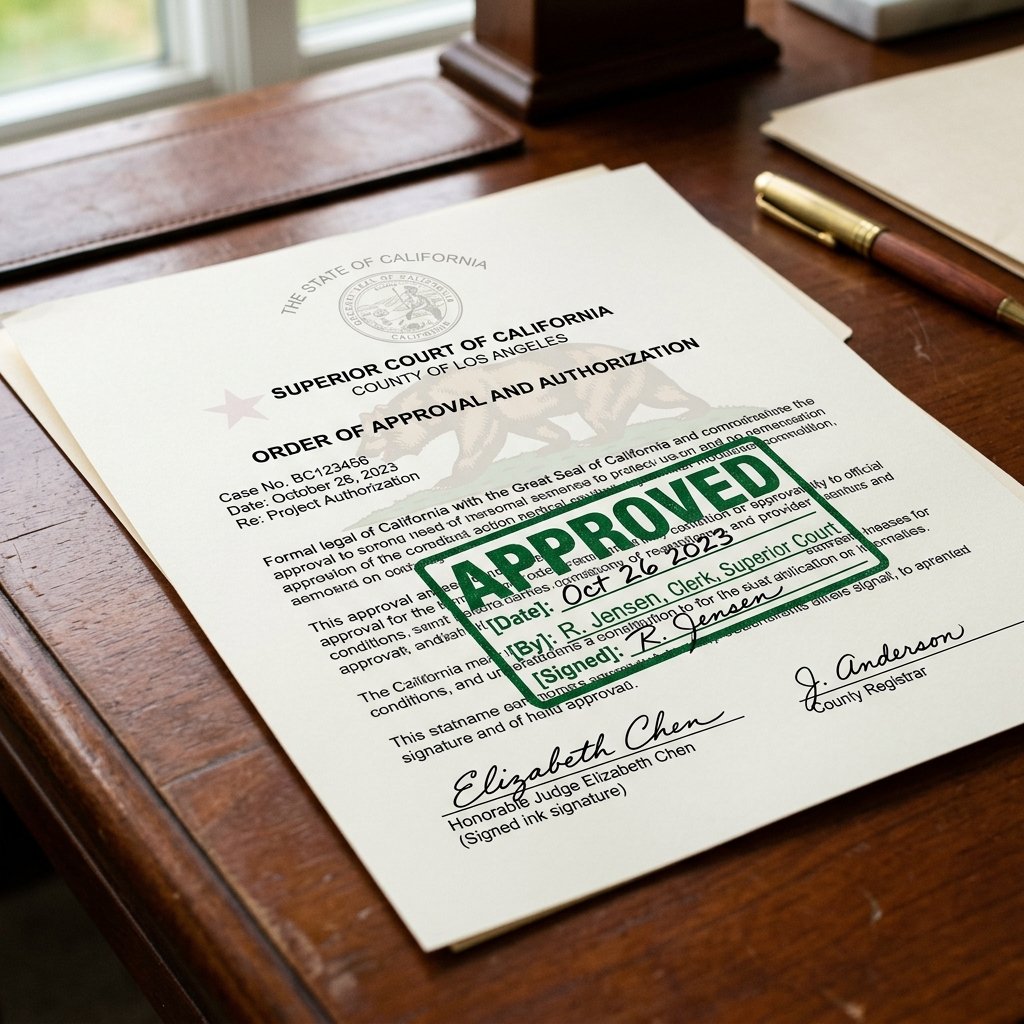
In California, once the petition is filed, it generally takes between 2 to 4 months for the judge to sign the order. However, courts in heavily populated counties like Los Angeles, San Diego, or Alameda can take 6 months or longer due to massive administrative backlogs.
After the judge signs the order, the court clerk updates the California Department of Justice database. You should then proactively notify private data brokers to ensure your online reputation is cleared.
The California Clean Slate Act (Automatic Relief)
In recent years, California passed the Clean Slate Act (AB 1076 and SB 731), which aims to automate the expungement process.
Under these laws, the California Department of Justice is supposed to automatically clear certain qualifying misdemeanor and felony arrest and conviction records if the required time has passed and all terms of the sentence have been completed.
However, you should not wait for the automatic system. The automated system is notoriously slow, frequently buggy, and relies on court clerks perfectly entering data. If there is a typo in your file, the algorithm skips you. If you need a clean record for a job today, you should manually file a petition for dismissal rather than waiting for the state to eventually get to your file.
Clear your California record today.
Take control of the process. Our automated legal platform prepares your exact CA court forms (CR-180 & CR-181) so you can file without delay.