Table of Contents
- What Exactly is Expungement?
- Can Employers See Expunged Records on a Background Check?
- Exceptions: When Expunged Records Can Still Be Seen
- The Problem with Private Background Check Companies
- How to Ensure Your Record is Truly Clear
- What to Say in Job Interviews After Expungement
- Taking the Next Step Toward Your Fresh Start
You've finally done it. After navigating the complex legal system, paying the fees, and waiting through the mandatory periods, the judge signed the order. Your criminal record has been officially expunged. But as you prepare your resume for that dream job, a sinking question remains: Can employers still see my expunged record?
It is the most common and anxiety-inducing question our clients ask at ExpungePro. The fear of a past mistake suddenly resurfacing during a background check can paralyze even the most qualified candidates. The good news? In the vast majority of civilian employment situations, the answer is a resounding no. Once a record is expunged, you have the legal right to act as if the arrest or conviction never happened.
However, the reality of the digital age makes things slightly more complicated. Between outdated private databases, federal exceptions, and government security clearances, understanding exactly who can see what is crucial for your peace of mind and career planning.
What Exactly is Expungement?
Before diving into what employers can see, it is vital to understand what expungement actually does. Legally speaking, expungement is the process by which a record of criminal conviction is destroyed or sealed from state or federal record. An expungement order directs the court to treat the criminal conviction as if it had never occurred.
When an order of expungement is granted, the court sends directives to various law enforcement agencies, including the arresting police department, the state department of public safety, and sometimes the FBI, instructing them to remove or seal the record from their public-facing databases.
This is distinctly different from record sealing, which simply hides the record from the general public but leaves it accessible to law enforcement and certain employers. Expungement is the closest thing the justice system has to a "delete" button.
Can Employers See Expunged Records on a Background Check?
For standard, private-sector employment, employers cannot see expunged records.
When you apply for a job at a retail store, a tech company, a bank, or a marketing firm, the employer will typically hire a third-party background check company (Consumer Reporting Agency or CRA) to run a standard check. These companies pull data from public court records and state repositories.
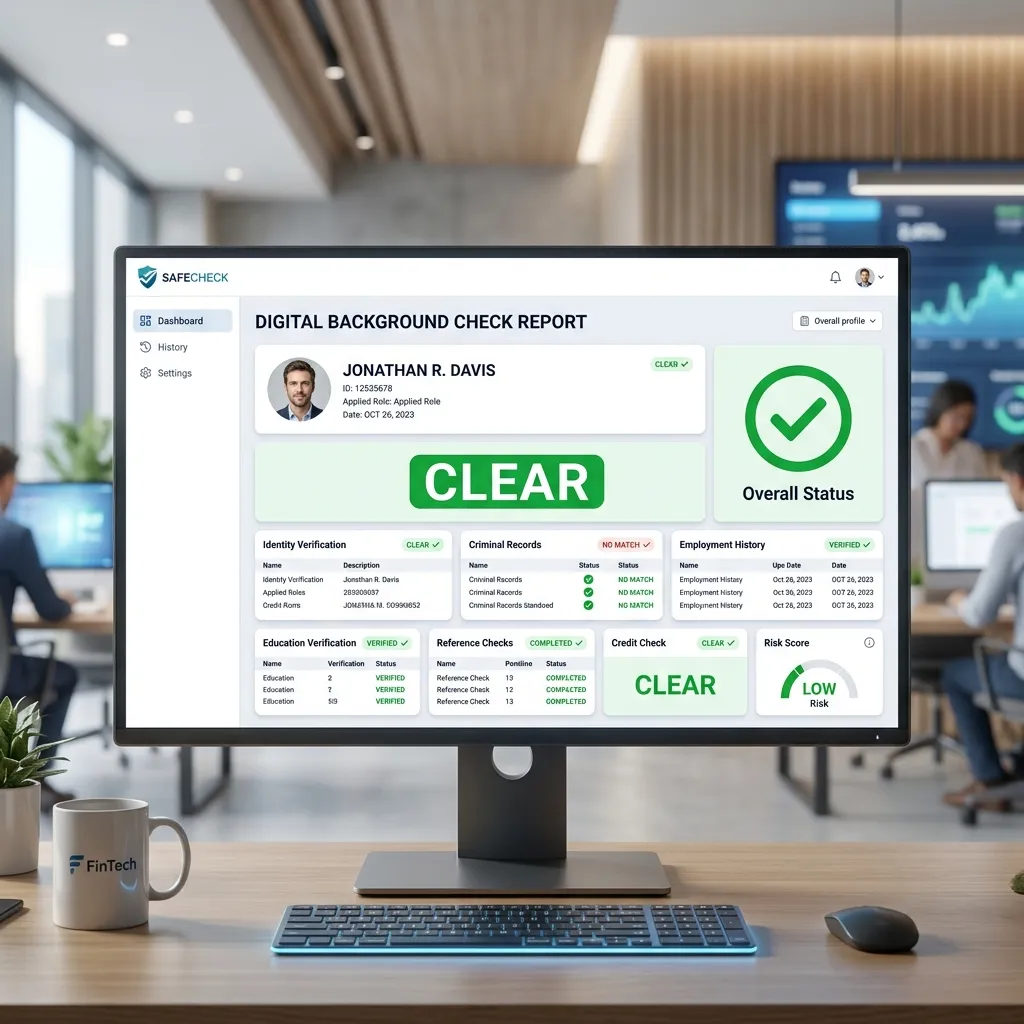
Because the court has legally removed your record from public view, the background check company will find nothing. Their report to your prospective employer will simply state "Clear" or "No Record Found."
Furthermore, under the laws of almost every state, you are legally permitted to answer "No" if an employer asks on a job application, "Have you ever been convicted of a crime?" If the only crime you committed was expunged, you are not committing perjury or lying on your application by denying it. The law explicitly grants you this right to facilitate your reintegration into society.
Stop worrying about your background check.
Find out if your record is eligible to be completely removed from public databases. Our instant system covers all 50 states.
Start Free Eligibility CheckExceptions: When Expunged Records Can Still Be Seen
While private employers remain in the dark, there are specific, legally sanctioned exceptions where an expungement does not completely erase the past. These exceptions generally revolve around highly sensitive positions, government work, and vulnerable populations.
Government and Law Enforcement Jobs
If you apply to be a police officer, FBI agent, or a state trooper, the hiring agency will have access to your original, unexpunged record. Law enforcement agencies maintain secure, internal databases (such as the NCIC) that are not subject to standard expungement orders. They require complete transparency to assess an applicant's history.
Security Clearances
Jobs requiring federal security clearances (Secret, Top Secret) will uncover expunged records. The federal government's background investigation process, managed by the Defense Counterintelligence and Security Agency (DCSA), is extraordinarily thorough. If you are applying for a clearance, you must disclose the expunged offense. Lying during a security clearance investigation is a federal crime and will result in an immediate denial.
Licensing Boards (Healthcare, Law, Finance)
State licensing boards for nurses, doctors, lawyers, and financial advisors often have statutory authority to view expunged records. For example, if you are applying to the State Bar to become an attorney, you must disclose all past arrests and convictions, even if they were successfully expunged. The board will consider the nature of the offense, how much time has passed, and your rehabilitation when determining your moral character.
Jobs Involving Vulnerable Populations
Positions involving children, the elderly, or disabled individuals (such as teaching, day-care, or nursing home administration) often trigger deeper background checks. Depending on the state, agencies regulating these fields may be permitted to view expunged records to ensure the safety of vulnerable citizens.
If you are unsure whether your specific felony or misdemeanor qualifies for expungement, you should review what felonies cannot be expunged in your jurisdiction.
The Problem with Private Background Check Companies
Here is the most frustrating hurdle for many individuals who have successfully navigated the expungement process: The Ghost Record.
While government databases update immediately following a judge's order, private background check companies and data brokers do not. Companies like Checkr, GoodHire, and hundreds of smaller data scrapers purchase bulk data from courts on a monthly or quarterly basis.
If a private company bought the court's data in January, and your expungement was granted in March, that private company's internal database still shows your conviction. If an employer uses that specific company in April, your expunged record might illegally appear on the report.
Under the Fair Credit Reporting Act (FCRA), Consumer Reporting Agencies are required to take "reasonable procedures to ensure maximum possible accuracy." Reporting an expunged record is a violation of the FCRA, but it happens thousands of times a day simply due to lag times in data synchronization.
How to Ensure Your Record is Truly Clear
Getting the judge's signature is only step one. To ensure employers cannot see your expunged records, you must actively manage your digital footprint.
- The "Shotgun" Update Request:Once your expungement is granted, you or your legal representative should send a copy of the expungement order to the major background check companies (like Checkr, HireRight, and Sterling) and data brokers. This forces them to manually update their internal databases immediately, rather than waiting for their next scheduled bulk update.
- Run a Check on Yourself:Before applying for your dream job, run a background check on yourself using one of the major commercial services. This allows you to verify that the expungement has propagated through the system and gives you a chance to dispute any lingering ghost records before an employer sees them.
- Remove Mugshots from Google:An expungement seals the court record, but it does not automatically delete the news article from the local paper or the mugshot from a public shaming website. If an employer Googles your name and sees a mugshot, the court expungement won't save you. You must engage in active online reputation management to suppress or remove these results. Learn more in our guide on how to remove mugshots from Google.

What to Say in Job Interviews After Expungement
If you are applying for a standard job that does not fall into one of the exceptions listed above (government, security clearance, etc.), the rule is simple: You do not have to say anything.
When the interviewer asks, "Is there anything in your background we should know about?" you can confidently answer, "No."
If the application asks, "Have you ever been convicted of a felony?" you check the box that says "No."
You have paid your debt to society, and the court has legally wiped the slate clean. You are not obligated to carry the stigma of your past into your future interviews. Speak confidently about your skills, your experience, and what you bring to the company. Do not volunteer information about an expunged record unless you are specifically applying for a position (like law enforcement) where disclosure is legally required.
Taking the Next Step Toward Your Fresh Start
The fear of a background check should not keep you underemployed or trapped in a job you hate. Expungement is a powerful legal tool designed specifically to allow you to move forward without the anchor of a past mistake dragging you down.
While employers in the private sector cannot see expunged records, achieving a truly clean slate requires ensuring that private databases and search engines also reflect your new legal reality. It requires a comprehensive approach to background check removal.
At ExpungePro, we don't just file the court paperwork. Our technology actively monitors hundreds of private databases to ensure your record is actually removed, not just sealed at the courthouse. We handle the legal filings, the data broker removals, and the search engine suppression, all in one place.
Ready to clear your name?
The process takes less than 60 seconds to start. Use our free, confidential eligibility checker to see what records can be removed in your state today.
Frequently asked questions
- Can employers see expunged records on a background check?
- In most cases, no. Once a record is expunged, it is removed or hidden from the public databases that standard employment background checks pull from, so a typical private employer will not see it.
- Do you have to disclose an expunged record on a job application?
- In most states, once a record is expunged you can legally answer 'no' when asked if you have been convicted of a crime, because the law treats the conviction as if it never happened. Certain regulated jobs are exceptions.
- Who can still see an expunged record?
- Law enforcement, courts, and some licensing boards or government and security-clearance employers may still access expunged records under specific state laws, even though private employers cannot.
Get the free Record-Clearing Starter Kit
A plain-English guide to expungement and record sealing: who qualifies, waiting periods, the documents you need, and the mistakes that get petitions denied.
Community Discussion & Questions
20Ask questions, share job application experiences, or learn from verified community members.
Join the conversation or ask a question
For your privacy, please use first name and last initial only (e.g. Marcus B*). No personal contact info.
Huge tip for anyone reading this: pay close attention to the EXACT wording on the questionnaire. If it asks 'Have you ever been convicted of a felony that has NOT been expunged or sealed?', answering 'No' is 100% legal. If you say 'Yes' out of nerves, the HR recruiter’s automated applicant tracking system will just reject you before a human even reads your explanation.
I’ve been putting this off for 4 years because local lawyers quoted me $3,500 upfront just to file the petition. Is there a way to verify if my specific charge is even eligible before spending hundreds or thousands on lawyer retainers?
@Michael C* That sticker shock is exactly why we created ExpungePro! You shouldn't have to pay thousands just to find out if your record can be cleared. You can use our free 60-second Eligibility Checker at the top of this page to see if your charge qualifies under your state's current statutes before spending a dime.
My court record was sealed/expunged, and HireRight came back clean, but if someone Googles my name, an arrest photo on one of those predatory mugshot scrapers is still ranking on page 1 of Google images. Does court expungement automatically force those websites to take it down, or is that a separate process?
@Anthony G* — Unfortunately, no. The courts notify official law enforcement repositories, not private offshore mugshot websites. You either have to send formal legal takedown demands or have a reputation service scrub and de-index them from Google. Don't pay those mugshot sites directly though—often they just syndicate your picture to sister sites.
Does this also apply to tenant background checks for apartment leasing? I was rejected by a property management company last year for an old dismissed charge. If I get it expunged, can landlords still see it?
@Kendra B* Yes! Landlords use tenant screening services like RentGrow or TransUnion SmartMove. After my expungement was completed, I applied at a luxury apartment complex that previously rejected me, and the tenant report came back completely spotless. Night and day difference.
I just had a 7-year-old misdemeanor charge officially expunged in Texas last month. I'm filling out a Workday application for a financial services firm and it asks: 'Have you ever been convicted of a misdemeanor or felony?' Even though the law says I can answer 'No', my heart is pounding. Does an automated background check like Checkr or Sterling ever pull an old cached copy?
Hi Marcus! Legally, once the signed order is finalized, you can truthfully answer 'No' for civilian employment. However, you hit on a huge issue: private background check companies update their internal databases on different cycles. If a consumer reporting agency pulls stale data, you have immediate dispute rights under the FCRA. We always recommend running a private self-check first to be 100% sure before hitting submit on your dream job.
@Marcus B* — Going through this exact thing right now. Always keep 3 certified copies of your signed expungement order from the county clerk in a fireproof folder at home. When I applied for an IT role at a hospital, Sterling flagged a record that was cleared 4 months prior. I sent the court stamped order directly to Sterling's dispute desk and they removed it within 48 hours.
How long does it usually take for background screening databases to update after the judge signs the expungement order? The judge signed mine 3 weeks ago, and I have a job offer conditional on a background check starting in 10 days. Am I safe?
In my state, it took about 45 days for the State Police repository to distribute the order to all the private clearinghouses. If your check is in 10 days, grab an expedited copy of the signed order from your clerk right away so you have it ready to email the HR coordinator just in case.
What happens if a background check company accidentally lists an expunged charge and the employer rescinds the job offer? Can you sue the background check company?
@Brian T* Yes! Under the FCRA, employers must provide a 'Pre-Adverse Action Notice' along with a copy of your background report BEFORE denying you employment. This legally gives you 5 to 7 business days to dispute inaccurate or expunged records with the screening agency. Screening companies face statutory damages if they fail to maintain reasonable procedures to avoid reporting sealed/expunged records.
Does anyone have experience with state nursing boards? I'm finishing my RN degree this fall and had an expunged reckless driving conviction from college (2018). The article mentions licensing boards can sometimes see records that normal private employers can't. Will this block me from getting licensed or should I consult someone before submitting my board application?
@Latoya M* I’m an RN in Ohio! The Board of Nursing uses LiveScan (FBI fingerprinting), so they will see that an expunged case existed, but in my experience, state boards care way more about total honesty and rehabilitation. Disclose it voluntarily to the board with your certified disposition showing it was expunged. Hospitals that hire you later do standard commercial checks and won't see it at all. Don’t give up, finish school!
I had a non-violent felony dismissed and expunged in Florida back in 2021, but I am now moving to California for a tech sales position. Since California has strict Ban-the-Box and 7-year lookback rules, which state law governs the screening company doing the report?
@Nathan D* Background screening agencies must comply with the laws of the state where the employment will occur as well as federal FCRA. Because California only allows reporting convictions (not dismissals or expungements) and limits standard searches to 7 years, you're in one of the most protected states in the country.
Looking into getting my Class A CDL and applying for hazmat endorsement. Will an expunged DUI from 6 years ago show up during the TSA background check or the Department of Transportation screening? Trying to decide if it's worth investing in the driving school tuition right now.
TSA Hazmat clearances do a direct FBI biometric search so federal agencies see the arrest history unless the actual arrest record itself was expunged at the state level with an order instructing CJIS/FBI removal. Definitely double-check if your attorney submitted the order to the state department of public safety to notify the FBI.