Table of Contents
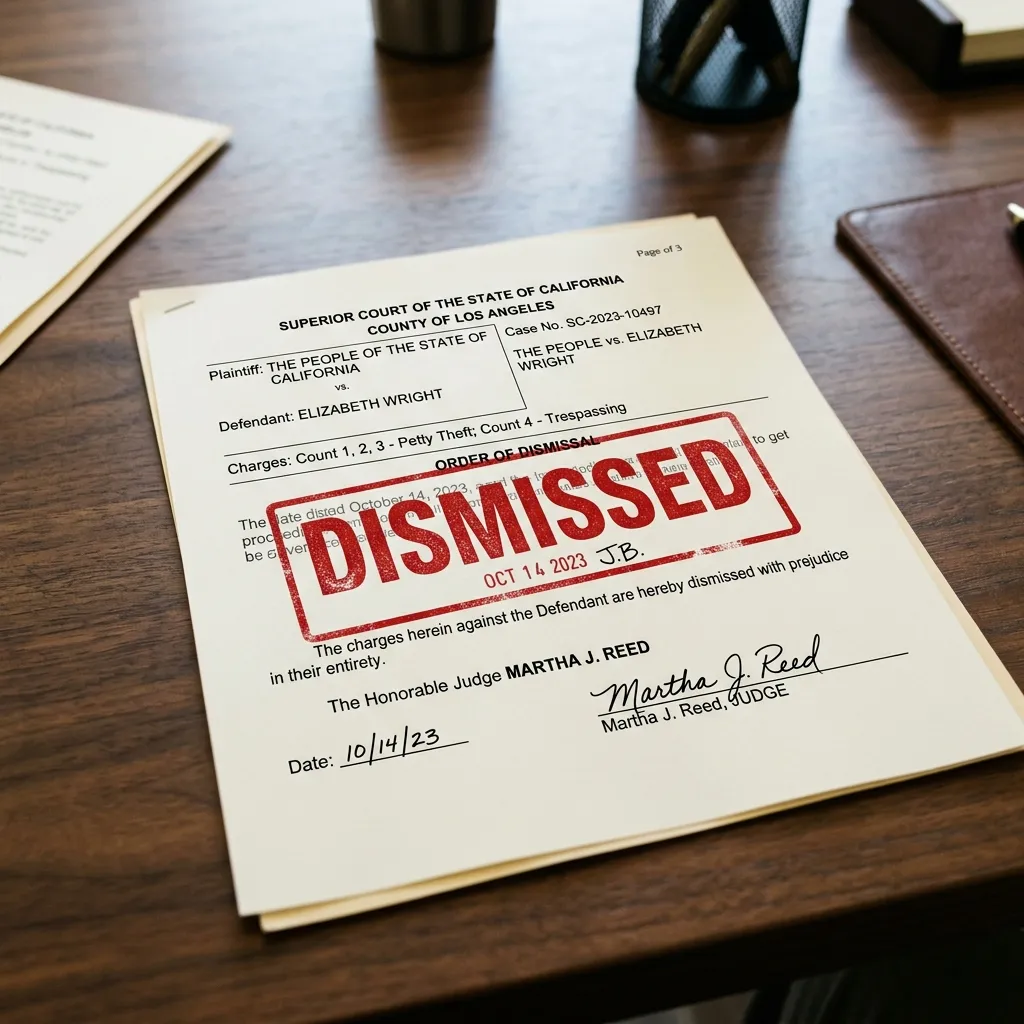
You went to court, you stood before the judge, and you heard the magic words: "Case Dismissed." You walked out of the courthouse believing the ordeal was finally over. But months later, an employer pulls a background report, and there it is in black and white. If you are asking, "Can dismissed charges appear on background checks?" the unfortunate and frustrating answer is: Yes, they absolutely can.
One of the most dangerous legal misconceptions in the United States is the belief that if you are not convicted of a crime, your record is automatically wiped clean. In reality, the arrest record and the court filing take on a life of their own, often causing as much damage to your career as an actual conviction.
The Myth of "Innocent Until Proven Guilty"
The phrase "innocent until proven guilty" applies inside a courtroom. When a jury is deciding whether to send you to prison, the burden of proof is entirely on the state. However, outside the courtroom, in the court of public opinion and corporate HR departments, the standard is very different.
When you are arrested, a public record is created. When the district attorney officially files charges against you, another public record is created. These records are entered into the county clerk's database.
Even if the district attorney later realizes they have the wrong person, or a judge throws the case out due to lack of evidence, those original records of the arrest and the charge do not vanish. They simply receive an update at the very bottom of the file reading: "Disposition: Dismissed."
Why Dismissed Charges Show Up
Private background check companies (like Checkr, HireRight, and GoodHire) make their money by scraping and aggregating public court data.
When an employer pays $30 for a background check on you, the company queries their database for your name and date of birth. Because your arrest record is a public document, the algorithm grabs it and slaps it onto the report.
A compliant background check company will include the final disposition (showing that the case was dismissed or that you were found not guilty). However, predatory data brokers and sloppy background check companies often scrape the initial arrest data but fail to update their systems with the final dismissal. This leaves you looking like you have an open, pending criminal case.
Turn a dismissal into an erasure.
If your case was dismissed, you are highly likely to qualify for an immediate expungement to destroy the arrest record entirely.
Check Eligibility InstantlyWhat Employers Actually Think
Imagine you are an HR manager sitting at a desk, reviewing two identical resumes. Both candidates have great interviews. You run background checks on both.
Candidate A's report comes back completely blank.
Candidate B's report shows an arrest for felony theft three years ago, but the disposition says "Dismissed."
Legally, the HR manager is not supposed to discriminate against Candidate B for an arrest that didn't lead to a conviction. The Equal Employment Opportunity Commission (EEOC) heavily frowns upon using non-convictions to deny employment.
Practically, however, human nature takes over. The HR manager might wonder: "Did they actually do it, but got off on a technicality? Did the witness just fail to show up?" Rather than risk hiring a potential liability, the HR manager simply chooses Candidate A, telling Candidate B that they "went in a different direction."
It is unfair, it borders on illegal, but it happens thousands of times a day.

The 7-Year Rule for Non-Convictions
There is a federal limit to how long this dismissed charge can haunt you. As detailed in our guide on how far back background checks go, the Fair Credit Reporting Act (FCRA) prohibits Consumer Reporting Agencies from reporting non-convictions (arrests, dismissed charges, acquittals) that are older than seven years.
The seven-year clock starts on the date of the arrest. Once seven years have passed, standard background check companies must legally drop the arrest from your report.
However, seven years is a long time to put your career on hold. Furthermore, this rule does not apply to government security clearances, law enforcement jobs, or jobs with salaries over $75,000 (unless you live in a state with stricter consumer protection laws).
How to Permanently Fix a Dismissed Record
You should not have to suffer the consequences of a crime you were not convicted of. The only way to guarantee a dismissed charge does not ruin a job opportunity is to legally erase the underlying arrest record.
Because your case was dismissed, you are in the strongest possible position to request a legal expungement.
In almost every state, if the charges against you were dropped, dismissed, or you were found not guilty, you are eligible to have the arrest record expunged immediately, without the long statutory waiting periods required for actual convictions.
Once the judge signs the expungement order for your dismissed charge, the court will direct the police department and state repositories to destroy the arrest record and booking photo. If a background check company attempts to pull your file, the clerk will legally reply that no such record exists.
Don't let a dismissal hold you back.
Clear the arrest record completely. Use our automated system to generate the paperwork required to expunge your dismissed charges.
Frequently asked questions
- Can dismissed charges show up on a background check?
- Yes. A dismissal ends the case, but the underlying arrest and court record usually remain public and can still appear on a background check until you have them expunged or sealed.
- Why do dismissed charges still appear?
- Background check companies pull from public court and arrest records, which aren't automatically cleared when a case is dismissed. The record stays visible until it's legally removed.
- How do I remove a dismissed charge from my record?
- In most states you can petition to expunge or seal a dismissed charge, often with a shorter or no waiting period since there was no conviction. Once granted, it should no longer appear.
Get the free Record-Clearing Starter Kit
A plain-English guide to expungement and record sealing: who qualifies, waiting periods, the documents you need, and the mistakes that get petitions denied.
Community Discussion & Questions
20Ask questions, share job application experiences, or learn from verified community members.
Join the conversation or ask a question
For your privacy, please use first name and last initial only (e.g. Marcus B*). No personal contact info.
When I asked the court clerk why my dismissed charge was still online on the county portal, she snapped at me and said 'We don't erase history, honey, you need a signed judge's order.' That was a huge wake up call. Dismissal does not equal erasure.
@Felicia R* Exactly! Courthouses are record keepers, not your advocate. I used ExpungePro's service to get the petition drafted, filed, and signed by the judge. The moment the order was signed, the clerk had to legally scrub the portal docket within 30 days.
I had a felony charge completely dismissed for lack of evidence 2 years ago (mistaken identity during a bar scuffle). A hiring manager told me off the record that their risk committee passed on me because seeing 'Felony Arrest' spooked them even though the status said 'Dismissed'. How is this even legal?
Jermaine, you highlighted the single biggest injustice in employment screening: the psychological bias of 'where there's smoke, there's fire.' To risk committees and automated ATS filters, a dismissed felony arrest looks almost identical to a conviction. The only true remedy is a court-ordered expungement that deletes the arrest record at the root so screening companies receive a clean report.
@Jermaine K* Experienced the exact same heartbreak for an accounting role. The recruiter said 'we can't take the liability'. I hired ExpungePro to expunge the dismissed charge, and since it was dismissed with prejudice, the order went through in 75 days. Got hired at a competing firm 3 months later. Wipe it from the record completely.
Since my case was dismissed and there was no conviction, is expunging it faster and cheaper than an actual conviction expungement?
Yes, Quentin! In most states, dismissed charges bypass long statutory probation waiting periods, and prosecutors rarely object to expunging charges they dropped themselves. This makes expunging dismissed charges significantly faster and more straightforward. Use our Free 60-Second Eligibility Checker right now to see if your dismissed charge qualifies for an expedited filing!
I completed a 12-month Pre-Trial Intervention (PTI) diversion program for first-time offenders. The prosecutor dismissed the charges as promised. Does PTI automatically seal the case or do I have to file a separate petition?
Hi Corey! This catches so many people off guard: completing a diversion program or PTI does NOT automatically expunge your record! The prosecutor dismisses the charge, but the initial arrest, booking photo, and court docket remain 100% public until you file a formal petition for expungement. The great news is that completing PTI makes you an ideal statutory candidate for immediate expungement in almost every state!
@Corey S* Definitely don't wait. My public defender told me 'it's dismissed, you're free to go', but forgot to mention the expungement petition. Discovered it 3 years later when trying to adopt. File the expungement paperwork immediately while all your PTI completion certificates are fresh.
Isn't it illegal for private employers to ask about arrests that didn't lead to a conviction?
Under the Equal Employment Opportunity Commission (EEOC) enforcement guidance, employers generally cannot have blanket policies disqualifying applicants based solely on non-conviction arrests, because an arrest does not establish guilt. Furthermore, many states (such as California, Illinois, New York, and Washington) have specific Ban-the-Box statutes prohibiting employers from inquiring into or considering non-conviction arrests. However, rogue third-party screening reports still often surface them unless expunged!
Does Texas allow you to expunge dismissed charges immediately, or is there still a waiting period?
@Arturo M* In Texas under Code of Criminal Procedure Art. 55.01, if your charge was dismissed because of an absence of probable cause, or if the grand jury returned a 'No Bill', you have a statutory right to an immediate expunction. If it was dismissed under a deferred prosecution agreement, you may have to wait for the statute of limitations to expire depending on whether the DA consents.
My court minute order says 'Dismissed Without Prejudice'. The clerk told me I can't expunge it until the statute of limitations runs out. Is that true?
Yes, Dustin, that is correct in many jurisdictions. 'Without prejudice' means the prosecutor voluntarily dropped the charge for now, but retains the legal right to refile charges if new evidence surfaces before the statute of limitations expires. Many state expungement statutes require either that the dismissal be 'with prejudice' or that the criminal statute of limitations has officially expired so charges cannot be refiled.
Will a dismissed misdemeanor shoplifting charge from 2019 show up on a state medical board license check?
@Reginald H* Yes. State licensing boards (medical, nursing, pharmacy) receive raw LiveScan fingerprint returns from the FBI/State Police repository. Until you get a formal court order ordering the State Police and FBI to expunge the arrest record, the FBI record will state 'Arrest: Larceny - Dispo: Dismissed'. Don't let a dismissed charge delay your board credentialing.
The grand jury returned a 'No Bill' on my case, meaning they found zero probable cause to indict. Does a 'No Bill' still leave an arrest record on file?
Yes, Landon. Even though the Grand Jury completely rejected the prosecutor's indictment, the police department that booked you still submitted your arrest card to the state criminal repository. The great news is that a 'No Bill' gives you the cleanest, most expedited path to full expungement in court!